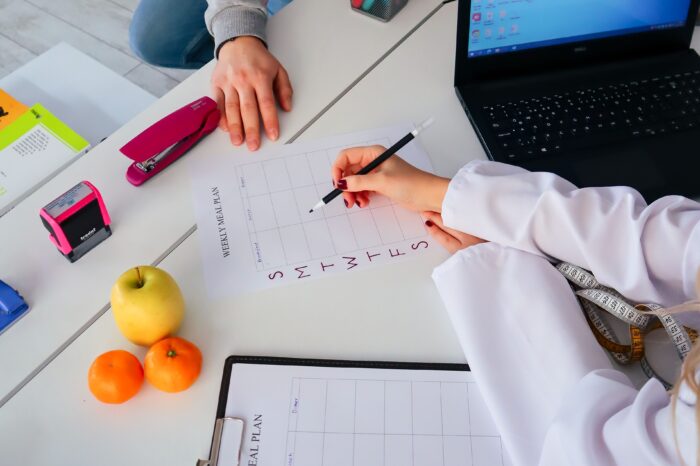
When people hear the words Health Coach, they sometimes assume it means someone who tells you what to eat, gives you a diet plan or hands you a list of supplements. But Health Coaching is about looking at the bigger picture and I help women understand their own needs, make more informed choices and create practical changes that fit into real life. And after 50, that bigger picture can include something we don’t always think of as part of our health: our home and the environment we live in every day.
A Health Coach is a supportive guide who helps you explore your lifestyle, identify what you would like to change and develop realistic habits and routines that work for YOU. A health coach doesn’t diagnose medical conditions or prescribe medication. Instead, coaching can help you look at the everyday behaviours, routines and environments that influence how you live and feel. Your doctor, nurse or other healthcare professional has an essential role when you have a medical concern. A health coach can sit alongside that care by helping you focus on the lifestyle choices and habits that are within your control.
The Institute for Integrative Nutrition (IIN), where I studied, uses a holistic, lifestyle based approach to help clients reach their health goals. Its training includes nutrition, coaching methods, lifestyle, behaviour change and the concept of bio-individuality, the understanding that there isn’t one approach to health that works for everyone.
Primary Food: It’s About More Than What’s on Your Plate
One of the concepts I particularly valued during my IIN training was Primary Food. It sounds as though we’re talking about food, but Primary Food isn’t what’s on your plate. IIN uses the term to describe the areas of life that nourish us in other ways, including relationships, physical activity, career, spirituality, environment, creativity, purpose and other aspects of our everyday lives. The idea is simple: we are nourished by more than food. Think about how different you feel when you are connected to people you love, enjoying what you do, moving your body, getting enough rest and living in an environment that feels comfortable and supportive. Those things don’t come in a packet, but they matter to the experience of wellbeing.
And then there’s Secondary Food.
Secondary Food is the food we traditionally think about when we talk about nutrition, what we eat and drink. What’s on our plate. The IIN approach doesn’t suggest that nutrition doesn’t matter. Rather, it places food within the wider context of your life. And for me, this is where ingredient awareness comes in.
I enjoy helping women become more confident about reading food labels, understanding ingredient lists and looking beyond the claims on the front of a packet. It’s not about becoming obsessed with every ingredient. It’s about knowing where to look, what questions to ask and when you can simply move on.
Why I believe your home belongs in this conversation.
This is where my work has naturally expanded. Our environment is one of the areas IIN includes within its broader Primary Food philosophy. And when I talk to women over 50, I often hear how much their homes has change over the years.
- Cupboards become full
- Wardrobes become difficult to navigate
- Drawers contain things that haven’t been used for years
- Spare rooms become storage rooms
- And sometimes you simply have so much around you that you don’t know where to begin.
This isn’t about being untidy. Life happens. Homes change as relationships, families, work, health, hobbies and circumstances change. But when your surroundings become difficult to manage, they can add to your mental load.
Research reviewed by the World Health Organization has found associations between household crowding and some measures of psychological distress and other mental-health outcomes, although the evidence is mixed and does not mean that every cluttered home causes stress or mental-health problems.
That is why I don’t approach decluttering as a race to become minimalist but rather as creating an environment that supports the life you want to live. Sometimes the benefits are wonderfully ordinary and when you know where things are:
- you spend less time searching
- everyday tasks can become easier
- your home can feel more manageable
- you can see what you already own
- you’re less likely to buy duplicates simply because you can’t find something
- you may save money by using what you already have
- you can create more space for the things you genuinely enjoy
Walking into a room that feels calmer and easier to manage can simply feel good. It doesn’t mean every woman will experience the same response and decluttering isn’t a treatment for stress or anxiety. But creating a home that works better for you can be one practical part of reducing unnecessary friction in everyday life.
And that’s where I believe a calm, judgement-free approach makes such a difference. It’s why I don’t see decluttering as separate from health coaching My work isn’t about telling you that you need to have a perfect diet, a perfectly organised home or a perfectly healthy lifestyle. Nobody can live like that. It’s about looking at the areas of life that may be creating unnecessary stress or complexity and asking what could be simplified.
Sometimes that might be your food choices.
Sometimes it might be understanding the ingredients in your skincare.
Sometimes it might be looking at the supplements you’re taking and asking whether you really understand why you’re taking them.
And sometimes it might be opening the cupboard under the sink and thinking:
“Why do I have all this stuff?”
All these things have something in common. They are about becoming more aware of what surrounds you and making intentional choices about what stays in your life. Lasting change doesn’t usually come from trying to overhaul your entire life overnight, it starts with one manageable step at a time. That is the philosophy behind my work with women over 50.
Through The Confident Shopper, I help women become more confident in understanding ingredients, labels and product claims. (eBook coming soon)
Through Simplify Your Space, I offer personalised decluttering and home organisation to help women create homes that feel calmer, clearer and easier to manage.
The two may seem like different services. To me, they are connected.
Both are about simplifying the things that surround you so you can make clearer choices and create more space for the life you want now.